

article
What Impacts Your Custom Home Build Cost? The Hidden Price of Slope, Soil, and Utilities in Georgia

⚡ Quick Answer: The Hidden Costs of Your Lot
The purchase price of your land is only the beginning. Your final build cost is heavily impacted by three hidden factors: Topography (Slope), which dictates the need for expensive retaining walls and massive grading; Soil Conditions, where Georgia’s granite bedrock and expansive red clay can require costly rock blasting and specialized foundation systems; and Utilities, where trenching water lines, extending sewer infrastructure, or installing a septic system on a remote lot can add $30,000–$150,000+ to your baseline budget before a single wall goes up.
The most common budget miscalculation in custom home building isn’t an overly ambitious floor plan or an unexpected materials price increase. It’s a lot that looked affordable on paper and turned out to be anything but once site preparation began.
In Georgia’s luxury residential markets—Alpharetta, Milton, Roswell, and the North Georgia foothills—the gap between a lot’s purchase price and its true cost to build on is frequently dramatic. A wooded parcel in Cherokee County priced at $150,000 can require $180,000 in grading, retaining walls, and septic infrastructure before the foundation is poured. A flat lot in an established Alpharetta subdivision priced at $350,000 may break ground for less than $25,000 in site preparation. The topography, the soil, and the utility access determine which scenario you’re in—and none of those variables appear in the listing price.
This guide breaks down the three categories of hidden site cost that most frequently surprise Georgia custom home buyers, and explains how a comprehensive land feasibility study completed before design begins is the most reliable tool for preventing them.
The Cost of Topography: Grading, Retaining Walls, and the True Price of a Sloped Lot
Slope is the most visible site variable and the most frequently underestimated cost driver in North Georgia residential construction. The same grade change that produces a compelling view and a daylight basement opportunity also produces the need for cut-and-fill grading, engineered retaining walls, and complex driveway approaches—all of which are priced by licensed contractors at rates that have no relationship to the lot’s purchase price.
Cut-and-Fill Grading: What It Costs and Why
Establishing a level building pad on a sloped lot requires moving soil from high points to low points across the site—a process called cut-and-fill grading. In North Georgia, where residential lots routinely carry 15 to 40 feet of elevation change, this process involves:
- Clearing and stripping: removing existing vegetation, topsoil, and organic material from the disturbance area before grading begins—typically $3,000–$8,000 on a standard residential footprint.
- Cut-and-fill earthwork: moving the actual soil volume. On a moderately sloped lot with 12–18 feet of grade change, earthwork costs commonly run $20,000–$50,000. Steeply sloped sites with 25+ feet of grade change can push this to $60,000–$100,000 before any structural work begins.
- Compaction testing and certification: engineered fill must be compacted in lifts and tested to confirm bearing capacity before foundation work begins—a code requirement in all Georgia jurisdictions that adds cost and timeline to the grading phase.
Retaining Walls: The Line Item Most Buyers Don’t Anticipate
Retaining walls are required wherever grade transitions between the home, driveway, property lines, or outdoor living areas exceed what can be managed by sloped landscaping alone. On North Georgia residential sites, they are not an exception—they are a routine site feature with significant cost implications:
- Segmental block retaining walls (common for landscape-level applications): $25–$45 per linear foot
- Engineered concrete or timber walls (required for walls over 4 feet in most Georgia jurisdictions): $50–$80 per linear foot
- Structural concrete retaining walls (required on steep sites with surcharge loads from driveways or structures above): $80–$150+ per linear foot
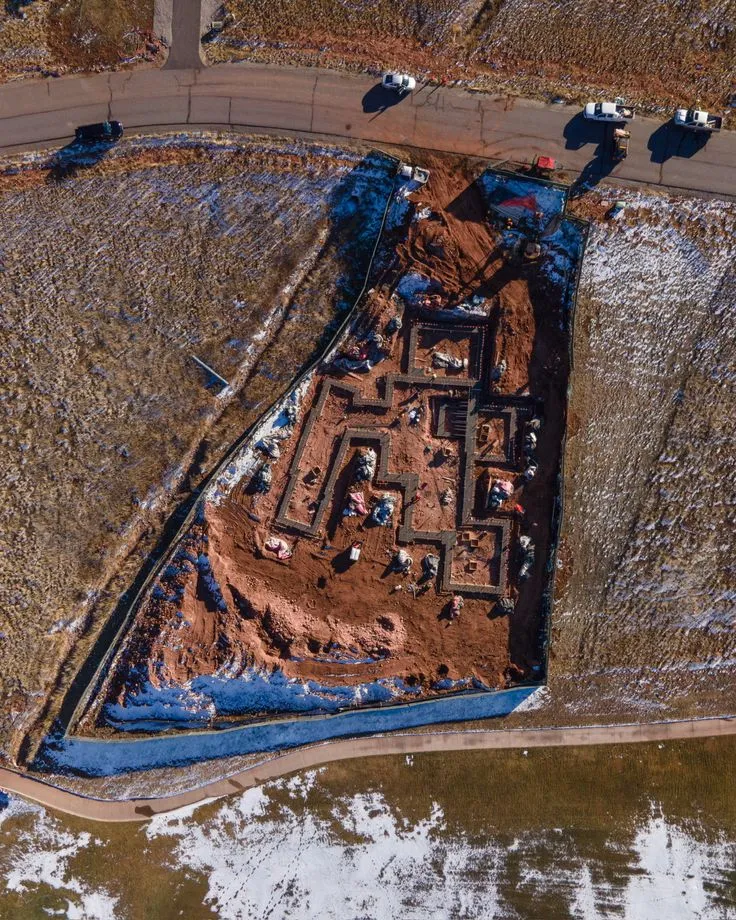
A steeply sloped lot requiring 300 linear feet of engineered retaining wall at an average of $65 per foot produces a $195,000 site cost line item—before a single footing is poured for the house itself. This figure is invisible in a per-square-foot construction estimate and absent from every listing sheet.
The Daylight Basement: Opportunity or Cost Trap?
A moderate slope is frequently marketed as a daylight basement opportunity—and it can be, when managed correctly. A grade change of 8 to 12 feet across the home’s footprint typically allows for a walkout basement level that adds 1,000–2,000 square feet of finished living area at 40–60% of the above-grade cost per square foot. That’s a genuine value when the site preparation cost to achieve it is proportionate.
The trap occurs when a steeply sloped site—one requiring $100,000+ in grading and retaining—is positioned as a daylight basement opportunity without disclosing the site preparation cost required to make it viable. The basement square footage is real. So is the cost of the slope that enables it. Both belong in the budget.
Soil Conditions and Geology: Georgia’s Red Clay, Underground Water, and the Cost of Rock
What you see on a lot is not what your foundation will be built on. Georgia’s subsurface environment produces two categories of cost risk that are invisible to the eye and undetectable without a professional investigation—and both are more common in the North Georgia market than most buyers realize.
Expansive Red Clay: The Foundation Design Driver
Georgia’s Piedmont soils are dominated by residual red clay with pronounced shrink-swell behavior: the clay expands significantly when saturated and contracts sharply during drought periods. A foundation that doesn’t account for this movement will experience differential settlement—expressed as cracking in masonry, sticking doors and windows, and in severe cases, structural damage requiring significant remediation.
Managing red clay requires a foundation design response, typically one or more of the following:
- Deeper footings bearing below the active zone of clay movement—adding concrete volume and excavation depth.
- Moisture barrier systems around the foundation perimeter to manage soil saturation levels.
- Pier-and-beam or drilled pier systems that transfer structural loads to more stable soil or rock below the clay layer—adding $15,000–$40,000 compared to a standard slab foundation on stable soil.
None of these design responses can be specified without a geotechnical report confirming the clay’s classification, depth, and expansion potential at the specific building footprint.
Underground Water: Seasonal High Water Tables
Georgia’s Piedmont topography produces localized areas of elevated seasonal water tables—particularly in low-lying areas, drainage swales, and lots adjacent to streams or wetlands. A high seasonal water table affects:
- Basement viability: below-grade space in a high water table area requires waterproofing systems, drainage boards, and interior drain tile that can add $20,000–$50,000 to basement construction costs.
- Septic system feasibility: high water table conditions can prevent conventional septic installation and require more expensive alternative systems.
- Foundation drain requirements: perimeter drainage systems become more complex and more critical when seasonal water is present at or near foundation depth.
Granite Bedrock: The Most Unpredictable Site Cost in North Georgia
North Georgia sits on one of the most granite-dense geological formations in the eastern United States. In the foothills of Cherokee, Pickens, and Gilmer counties—and even in suburban North Fulton lots with mature topography—granite bedrock can appear at depths as shallow as 12 to 24 inches below the surface.
When shallow rock is encountered during foundation excavation, the options are limited and expensive:
- Mechanical rock breaking (hydraulic hammers on excavators): effective for fractured or moderately hard rock—adds $8,000–$20,000 depending on volume.
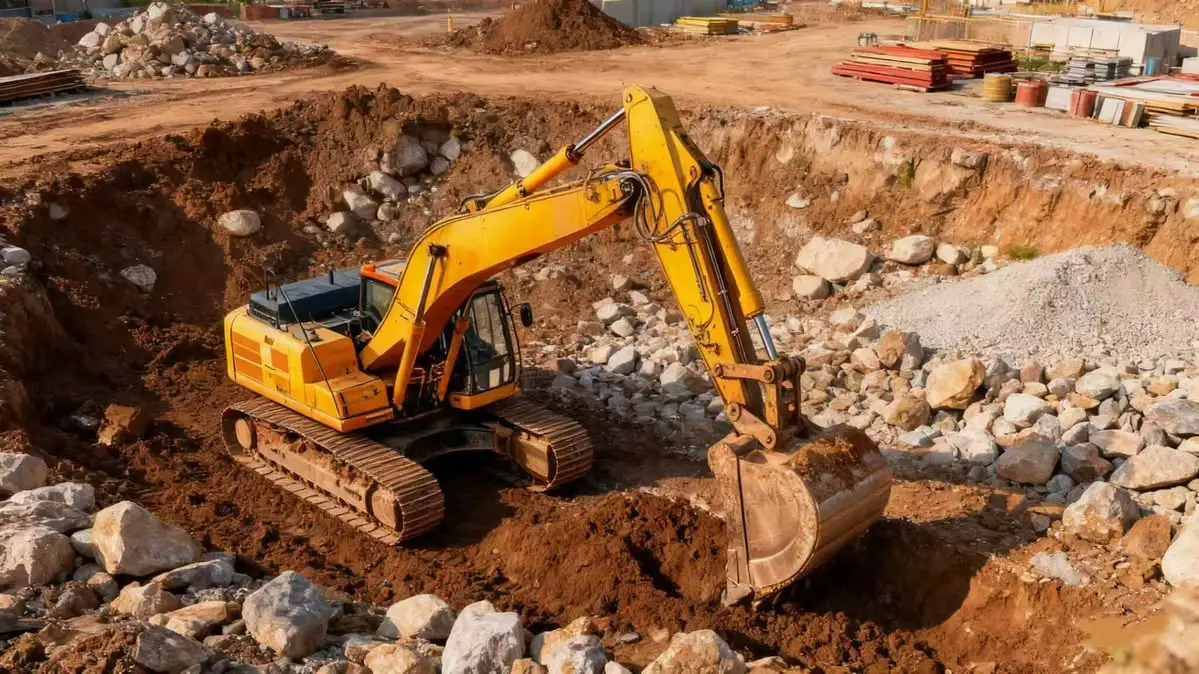
- Rock blasting: required for solid granite formations—involves permits, a licensed blasting contractor, and vibration monitoring. Adds $20,000–$60,000+ to site costs, with wide variance based on rock volume and proximity to adjacent structures.
- Foundation redesign around rock: in some cases, the building footprint can be adjusted to avoid rock concentrations—possible only when the rock location is known before the foundation is designed.
“A $150,000 lot can easily require $200,000 in site prep, making it more expensive than the flat $300,000 lot down the street. We’ve seen buyers choose land on price alone, only to discover the total project cost exceeded their budget before the foundation was poured. We don’t just design for the land—we design to protect your budget from what’s hiding underneath it.”
— Kateryna Keaton, Principal Architect, Kteam Architects
Utilities and Infrastructure: The Real Cost of Bringing Services to Your Lot
In established suburban subdivisions, utility infrastructure is already at the curb. In the semi-rural and rural contexts where many of Georgia’s most compelling lots are found—wooded North Fulton parcels, mountain lots in Cherokee or Pickens County, estate properties on private roads in Milton—utility access is a variable with significant cost implications that must be evaluated before purchase.
Public Sewer: Connection Fees and Line Extensions
Lots with access to public sewer are simpler, faster to permit, and carry no ongoing maintenance obligation beyond the monthly utility bill. But “access” is a nuanced term:
- Standard connection fee: where sewer infrastructure is already at the property boundary, connection fees in Fulton County and surrounding municipalities typically run $5,000–$15,000.
- Line extension cost: where the nearest sewer main is 200 to 500+ feet from the lot, extending the line requires open-cut excavation, pipe materials, and connection fees that can reach $30,000–$80,000+ depending on distance, depth, and pavement restoration requirements.
- Gravity vs. pressure systems: lots that sit below the nearest sewer main elevation may require a sewage grinder pump and pressurized force main—adding equipment cost and ongoing maintenance responsibility.
Septic Systems: When Public Sewer Isn’t Available
Rural and semi-rural lots without municipal sewer access require a private septic system permitted by the county health department. Septic costs vary significantly by system type—driven entirely by the soil’s percolation capacity, confirmed through a perc test:
- Conventional gravity-fed system: $8,000–$15,000 — requires soil with adequate natural percolation.
- Pressure-dosed (low-pressure pipe) system: $15,000–$25,000 — used where soil percolation is marginal.
- Drip-irrigation or mound system: $25,000–$45,000 — required on challenging soils with limited absorption capacity.
- Advanced aerobic treatment system: $35,000–$60,000 — required on the most restrictive soils; involves mechanical treatment components with ongoing maintenance contracts.
Beyond system cost, the septic drain field occupies a fixed area of the lot—typically 2,000 to 5,000 square feet—that cannot be built over, landscaped with deep-rooted plantings, or modified without county health department approval. Its location is a design constraint that must be known before the building footprint is finalized.
Water: Public Connection vs. Private Well
- Public water connection: where available, connection fees run $3,000–$12,000, with line extension costs similar in structure to sewer extensions.
- Private well drilling: required on lots without public water access. In North Georgia, well drilling is typically priced at $15–$30 per foot. Depth requirements vary significantly by location—wells in Cherokee County commonly reach 200 to 400 feet, producing total drilling costs of $4,000–$12,000 before pump, pressure tank, and water treatment system installation.
- Water quality testing: required before the well can be approved for residential use, and recommended whenever water quality is uncertain.
Power and Gas: The Cost of Remote Access
- Power line extension: in rural North Georgia, extending overhead power to a new lot can require coordinating with the local EMC (Electric Membership Cooperative). If the lot is more than 300 feet from an existing service point, extension costs—including poles, wire, and transformer—can range from $5,000 to $30,000+ depending on distance and terrain.
- Underground service: where overhead lines aren’t permitted or preferred, underground service requires trenching and conduit—adding cost but providing a cleaner visual result and better storm resilience.
- Natural gas availability: in much of North Georgia’s mountain communities, natural gas distribution does not reach rural lots. Homes in these areas typically use propane (requiring a tank and delivery access) or all-electric systems—a decision that affects HVAC equipment selection, appliance specifications, and operating costs.
Hidden Site Costs at a Glance
Ranges are representative of North Georgia and Metro Atlanta residential projects. Site-specific costs require a geotechnical report and contractor pricing to confirm.
How an Architect Protects Your Budget Before Design Begins
Every cost category in the table above has one thing in common: it is identifiable before purchase, if the right evaluation is performed during due diligence. It becomes a surprise only when that evaluation is skipped as part of the overall architectural design process.
Phase Zero: Site Evaluation Before Schematic Design
At Kteam Architects, we offer a pre-design site evaluation—what we call Phase Zero—specifically to surface these costs before the design process begins. As part of our specialized architectural services, this evaluation includes:
- Topographic analysis: reviewing the topo survey to identify grading scope, retaining wall requirements, and optimal building pad location before the footprint is drawn.
- Geotechnical report coordination: identifying whether soil conditions warrant a specialized foundation system and whether rock risk exists at the proposed footprint depth.
- Utility access verification: confirming sewer, water, power, and gas availability and flagging extension costs before the project budget is finalized.
- Preliminary site cost estimate: a grading, retaining, and infrastructure cost range that allows the owner to make an informed land purchase decision—or renegotiate the price based on real site data.
Designing Within the Budget, Not Around It
An architect’s role is not simply to draw what a client imagines—it’s to design something that can be built on the specific land for the stated budget. Site cost data, gathered before schematic design begins, allows us to:
- Adjust the building pad location to minimize grading if retaining wall costs are disproportionate to the design value they produce.
- Shift the foundation system specification to match confirmed soil conditions rather than assumed ones.
- Design outdoor living areas—pools, motor courts, terraces—within the ISR limit and the site preparation budget simultaneously, rather than discovering the conflict after permit submission.
As architects—not general contractors—our budget guidance is not shaped by an interest in the construction contract that follows. Our fee is fixed to the design scope. That independence is what allows us to tell a client when a lot is more expensive than it appears—and to quantify the difference before they’ve committed to the purchase.
Know Your Site Costs Before You Commit
The difference between a custom home project that stays on budget and one that doesn’t is almost always traceable to decisions made before design begins—specifically, whether the site’s hidden costs were identified before or after the land was purchased. Our team works with clients in Alpharetta, Milton, Roswell, and across North Georgia to evaluate lots before purchase and design homes that account for what the land actually costs to build on. To get started or ask questions about a specific lot, feel free to contact our team.
Ready to Start Your Project?
Our Georgia-based architecture team brings deep local expertise and a commitment to design excellence to every residential project.
SCHEDULE A CONSULTATIONA geotechnical (soil) report with test borings at the proposed building footprint is the only reliable method. The borings record the depth at which rock is first encountered—typically noted as “refusal” in the boring log. This report costs $1,500–$4,000 and should be commissioned during the due diligence period, before closing on the land.
Not always—but slope severity is the primary variable. A moderate grade of 8 to 12 feet across the building footprint can be managed cost-effectively and leveraged into a daylight basement. A steep lot with 25+ feet of grade change almost always requires retaining walls and grading costs that exceed the savings on the lot’s purchase price. A topographic survey and a preliminary site cost estimate, completed before purchase, are the tools that answer this question for a specific site.
On lots that pass a perc test with results supporting a conventional system, a septic installation ($8,000–$15,000) is significantly less expensive than a sewer line extension ($30,000–$80,000+). On lots with marginal soil, the alternative septic systems required can cost $35,000–$60,000—eliminating the savings. The perc test result, not the lot’s location, determines which scenario applies.
A conventional gravity-fed septic system—permitted when the lot’s soil passes a standard percolation test—costs $8,000–$15,000 and is the simplest and least expensive option. When soil absorption capacity is marginal, the county health department may require a pressure-dosed, drip-irrigation, mound, or advanced aerobic treatment system, ranging from $18,000 to $60,000 depending on type and site conditions. The perc test result, not the buyer’s preference, determines which system is required. On lots where no system type is viable, the lot is effectively unbuildable without municipal sewer extension.
Yes—and this is one of the most cost-effective ways to use architectural expertise early in a project. A Phase Zero site evaluation reviews the lot’s topography, zoning constraints, geotechnical risk, and utility access before purchase, producing a preliminary site cost range that allows you to make an informed offer—or renegotiate based on real data. At Kteam Architects, we conduct pre-purchase site evaluations specifically to surface hidden costs before capital is committed, not after it’s spent.