article
Designing and Building a House in Georgia: A Realistic 2026 Timeline Guide
Building a custom home is a marathon, not a sprint. In the highly active Georgia real estate market of 2026, the question isn’t just about how fast a crew can swing a hammer—it’s about navigating the red clay, unpredictable seasonal storms, and a complex web of local municipal regulations.
While a standard, cookie-cutter developer home might go up in six months, designing a house and building a residence that is truly custom and high-performance typically requires an 18 to 36-month commitment. At Kteam Architects, we believe that transparency is the ultimate luxury. Here is the unvarnished reality of the journey from an empty lot to your front doorstep in Georgia.
The “Fast-Track” Summary: 2026 Timeline Expectations
| Project Stage | Duration | Primary Drivers |
|---|---|---|
| Phase 1: Designing a House | 4 – 9 Months | Design Complexity, Client Feedback, Engineering Coordination |
| Phase 2: Permitting (The GA Gap) | 1 – 4 Months | County Efficiency, Review Boards & Tree Ordinances |
| Phase 3: Building a House | 10 – 20 Months | Site Topography, Weather, Material Lead Times |
| Total Horizon | 18 – 36 Months | From Initial Vision to Move-In Day |
Phase 1: Designing Your Vision (4 – 9 Months)
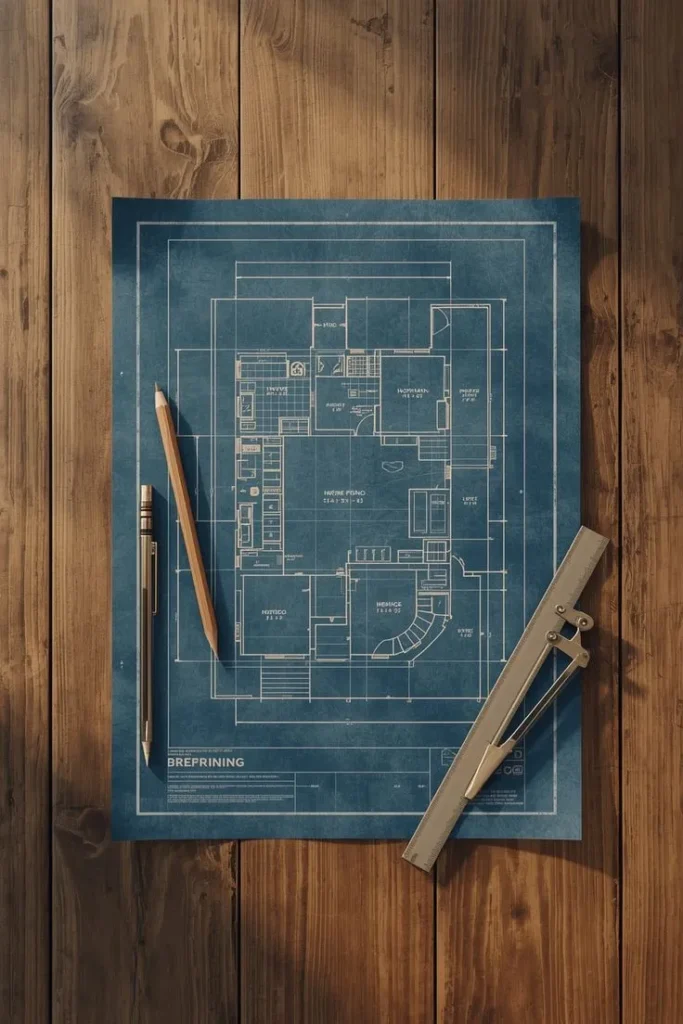
The most expensive mistake you can make is rushing into construction before the ink is dry on the plans. In 2026, designing a house is a highly structured progression that ensures your home performs exactly as well as it looks.
- Schematic Design (1-2 Months): This is the “big picture” phase. Your architect analyzes solar orientation, evaluates topographical massing (which is critical for North Georgia’s sloped lots), and perfects the spatial flow of the floor plan.
- Design Development (2-3 Months): This is where artistic vision meets structural engineering. At Kteam Architects, we utilize advanced BIM (Building Information Modeling) to integrate structural and HVAC layouts. This creates a “Digital Twin” of your home, allowing for immersive 3D walkthroughs so you can “feel” the spaces before we break ground.
- Construction Documents (2-4 Months): The “Technical Package.” These are the exhaustive, permit-ready blueprints that your local Georgia Authority Having Jurisdiction (AHJ) requires to issue a building permit, and what your general contractor needs for accurate pricing.
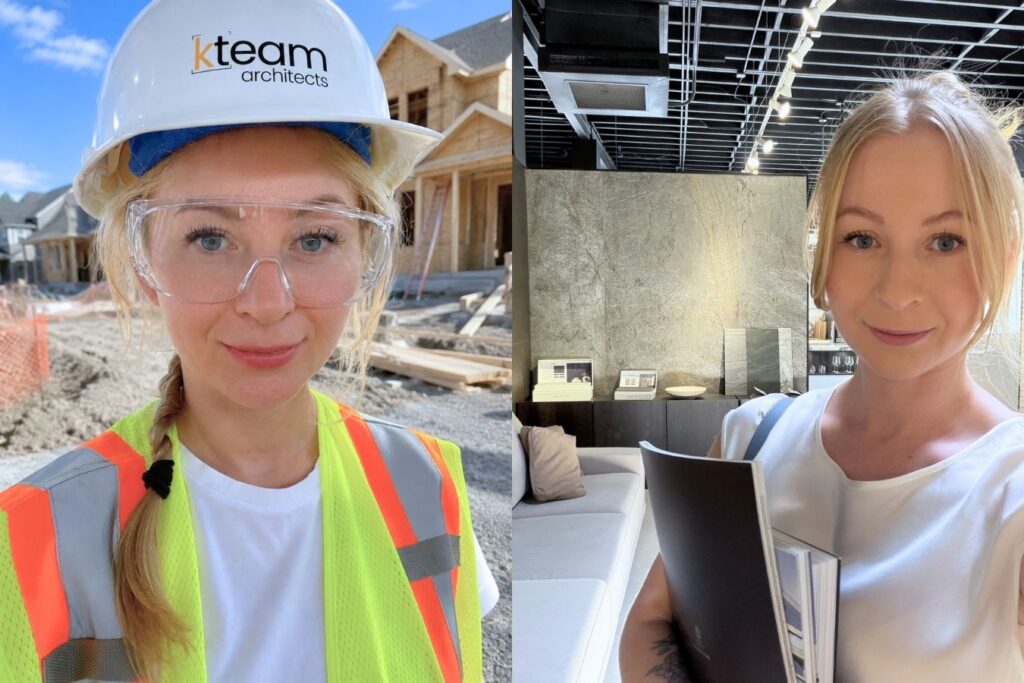
“Incomplete drawings are the #1 cause of permit delays and budget overruns in Georgia. To sail through review offices in Alpharetta or Milton, your documentation must be 100% coordinated. A two-hour professional review during the design phase can save you a two-year regulatory headache.”
— Kateryna Keaton, NCARB, Principal Architect
The Georgia Permit Gauntlet: Why Location Matters
In Georgia, there is no “standard” timeline for building permits. Every county has its own rhythm, staff capacity, and specific local constraints.
- Cherokee County: 4 – 6 Weeks. Generally faster, but heavily focused on strict environmental and erosion control on sloped sites.
- City of Alpharetta / Milton: 8 – 12 Weeks. Often requires high-level Design Review Board (DRB) approval and strict adherence to Tree Protection Acts.
- Fulton County (Unincorporated): 10 – 14 Weeks. Heavy scrutiny on Impervious Surface Ratios (ISR) and stormwater management.
- City of Atlanta: 14 – 20+ Weeks. A highly complex, multi-department review process involving zoning, watershed, and arborist approvals.
Phase 2: Building From the Ground Up (10 – 20 Months)
Once the permit is in your hand, the physical act of building a house begins. In Georgia, this phase follows a seasonal and logistical logic that cannot be rushed.
Foundation and the “Red Clay” Challenge (1 – 2 Months)
Georgia’s famous red clay is notoriously difficult to grade during the humid, thunderstorm-heavy summer season. A single week of heavy rain can delay site prep by ten days while the soil dries enough to meet engineering compaction standards.
Framing and the “Dry-In” Goal (3 – 5 Months)
The immediate target in Georgia construction is reaching “Dry-In” status—getting the roof on, windows installed, and the house wrapped—before the peak of summer humidity or the occasional winter freeze. Once sealed from the elements, interior work can proceed safely.
Systems, Finishes, and Construction Admin (6 – 12 Months)
This is the longest phase. It covers the “rough-ins” (plumbing, electrical, HVAC), insulation, drywall, and the bespoke finish work (custom cabinetry, flooring, and architectural millwork). During this entire period, Kteam Architects provides Construction Administration services, conducting site visits to ensure the builder is strictly adhering to the BIM model and design intent.
Checklist: Is Your Project Ready to Launch?
Use this checklist to determine if your timeline is realistic or if you are headed for a stall:
- ✔ Zoning Verified: Have you confirmed your “buildable envelope” after local setbacks?
- ✔ Septic vs. Sewer: If building in rural GA, has your Perc Test been legally recorded?
- ✔ Architect Before Contractor: Do you have a fully coordinated, BIM-tested set of drawings to bid out?
- ✔ Selection Lock-in: Have you chosen your tile, flooring, and fixtures? (Changing a window spec mid-build can add 2–4 months of delays).
- ✔ Tree Survey: Are there “specimen trees” on your lot subject to local municipal protection?
Georgia Factors: What Really Slows You Down?
The Weather Variable: It’s not just the rain; it’s the humidity. High moisture levels can delay concrete cures and wood acclimation for hardwood flooring.
The Battle for Premium Talent: In high-demand hubs like Atlanta or Alpharetta, the wait for high-end trades (master electricians, custom millworkers) is massive. Waiting a month for the “right” crew is always cheaper than paying to fix a mistake later.
Supply Chain Realities: While 2026 has seen stabilization, bespoke architectural elements (like specialized European glazing or custom stone) still carry 12-to-16-week lead times.
3 Ways to Speed Up Your Build
- Zero “Mid-Construction” Changes: Every time you move a wall after construction starts, the clock stops. Finalize 100% of your decisions during the designing a house phase.
- Early Material Selection: Finalizing finishes before breaking ground allows your General Contractor to pre-order “long-lead” items months in advance.
- Professional Documentation: Clean, BIM-coordinated drawings sail through permit offices, whereas messy, uncoordinated sets get buried under municipal “red lines.”
Ready to Start Your Project?
Our Georgia-based architecture team brings deep local expertise and a commitment to design excellence to every residential project.
SCHEDULE A CONSULTATIONFrequently Asked Questions (FAQ)
It might save 2–3 months of initial drafting time, but it often backfires. In Georgia, you still need a local licensed architect to adapt that stock plan to your specific site topography, foundation requirements, and local county codes. Often, “fixing” a generic plan takes just as long as custom designing a house from scratch.
Aim to start the architectural design process in the late summer or fall. If you secure your permits by late winter, your builder can break ground in early spring and achieve “dry-in” status before the heavy summer heat and rains arrive.
While the physical act of building a house takes longer (10–20 months), the quality and depth of the designing a house phase (4–9 months) entirely determine how stressful and expensive those construction months will be.